Art and Culture: Real Examples That Actually Explain It
"Art and culture" gets used so often it starts to feel meaningless. Here are real, specific examples that show what the phrase actually covers, and why the two things can't really be separated.
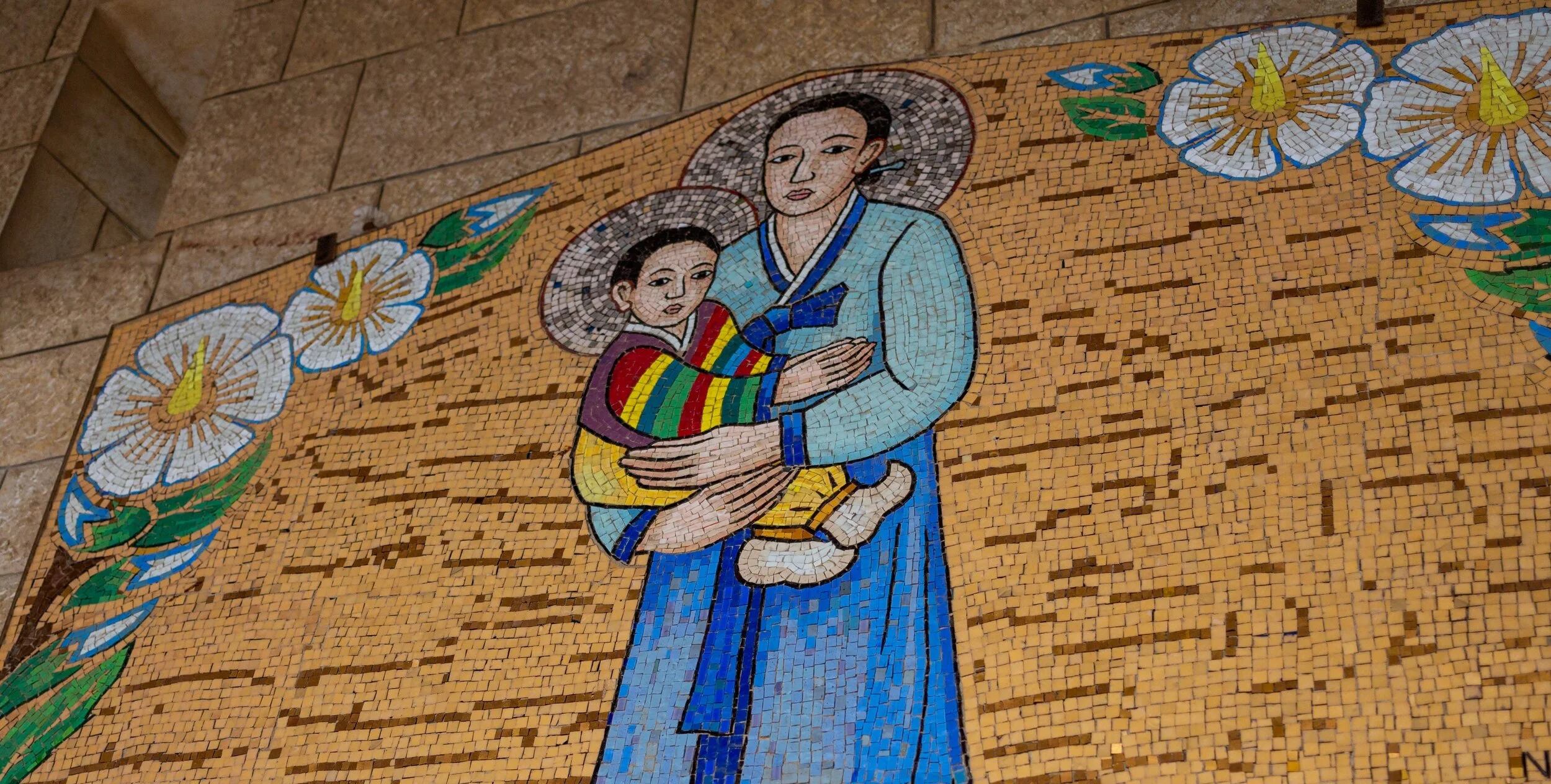
What does "art and culture" actually include?
The phrase gets thrown around in grant applications, museum brochures, and civic planning documents until it loses any real shape. So let's give it one. Art, in the broadest useful sense, is any human-made object, performance, or expression intended to communicate meaning, emotion, or beauty. Culture is the shared system of values, practices, and symbols that a group of people pass down and remake over time. Put them together and you get something specific: the ways a community expresses what it believes, fears, celebrates, and mourns.
They overlap almost completely. A Navajo weaving is both an art object and a carrier of cultural knowledge about color, geometry, and spiritual meaning. A Tamil Nadu Bharatanatyam performance is simultaneously a dance technique refined over centuries and a living document of Hindu devotion. Neither fits cleanly into "art" as a separate box from "culture." That tension is actually the interesting part.
For a broader look at how these two things feed each other, the piece on what is the relationship between art and culture goes deeper into the theoretical side. Here, though, we're staying concrete.
5 examples of art (with real context)
People-Also-Ask surfaces this question constantly, and most answers give you a dry list: painting, sculpture, music, literature, dance. Fine, those are categories. But examples with specifics are more useful.
1. Katsushika Hokusai's "The Great Wave off Kanagawa" (c. 1831)
A woodblock print, not a painting. That matters because woodblock printing was a commercial, reproducible medium in Edo-period Japan. Hokusai's image was one of 36 views of Mount Fuji, sold cheaply to travelers and merchants. It's now one of the most reproduced artworks in history, which would have surprised no one more than the people who bought the original prints as souvenirs. It's a strong example of how "high art" and popular craft are the same thing viewed from different distances in time.
2. The murals of Oaxaca, Mexico
Oaxaca has a continuous tradition of public mural-making that connects the pre-Columbian painted walls of Mitla to the 20th-century Mexican muralist movement (Rivera, Siqueiros, Orozco) to contemporary street artists working today. These murals aren't decorative. They're political, commemorative, and sometimes funerary. A tourist sees color on a wall. A local sees a record of contested history. Same object, completely different experience depending on cultural fluency.
3. West African kente cloth
Kente originated among the Ashanti people of present-day Ghana. Each pattern has a name and a meaning. Specific color combinations are reserved for specific occasions, royalty, or stages of life. Wearing kente without that knowledge isn't wrong, exactly, but it does strip the textile of its function as communication. As an art object it's extraordinary on purely visual grounds. As a cultural artifact it's a whole vocabulary.
4. Blues music from the Mississippi Delta
The blues developed in the late 19th and early 20th centuries among Black Americans in the Deep South, drawing on African musical structures, field hollers, and the specific lived reality of life under Jim Crow. Robert Johnson, Muddy Waters, Bessie Smith. The form is simple (typically a 12-bar structure) and the emotional range is enormous. It's also the root of most popular music made in the 20th century, which makes it one of the most influential art forms in recent history.
5. Pottery from the Jomon period in Japan (c. 14,000 BCE)
The oldest known ceramic vessels in the world come from Japan, produced by the Jomon people roughly 16,000 years ago according to Encyclopaedia Britannica's entry on Jomon pottery. These pots weren't made for galleries. They were used for cooking and storage. But the Jomon decorated them with elaborate cord patterns and flame-like projections that served no functional purpose. That impulse to add something beyond what's necessary is probably the oldest definition of art we have.
5 examples of culture in everyday life
Culture isn't only found in museums or formal ceremonies. It shows up in routine life in ways people rarely notice until they encounter a different set of norms.
Food and its rules
What you eat, when you eat it, who you eat with, and what it means to share a meal are all culturally specific. In many parts of West Africa, eating with your left hand is considered deeply disrespectful. In Japan, slurping noodles signals appreciation. In Mexico, the Day of the Dead involves building ofrendas (altars) loaded with the deceased's favorite foods. Food is one of the most immediate carriers of cultural meaning in daily life.
Language and its gaps
Some concepts don't translate. The Portuguese word "saudade" describes a melancholic longing for something beloved that is gone or may never have existed. The Danish concept of "hygge" refers to a specific quality of cozy conviviality that has no single English equivalent. These aren't just vocabulary gaps; they're evidence that cultures organize emotional experience differently.
How people mark time
Calendars are cultural objects. The Gregorian calendar dominates global commerce, but billions of people also track time by the Islamic lunar calendar, the Hebrew calendar, the Ethiopian calendar, or any number of regional agricultural cycles. When Nowruz (Persian New Year) falls at the spring equinox, millions of Iranian families clean their homes completely and set a table with seven symbolic items. That's culture operating as shared time-keeping and shared meaning simultaneously.
Dress and its signals
Clothing communicates. A Scottish clan tartan, a Japanese kimono worn at a specific age milestone, a white dress at a Western wedding or a red one at a South Asian wedding: all of these carry information that insiders read automatically. The signals shift constantly, which is why fashion is both a cultural product and a cultural record.
Greetings and physical space
In France, a two-cheek kiss between acquaintances is standard. In Thailand, a slight bow with hands pressed together (the wai) replaces handshakes. In New Zealand, a Maori hongi involves pressing foreheads and noses together to share breath. The rules for how close to stand, whether to touch, and how long to maintain eye contact are almost entirely cultural, learned so early they feel biological.
5 examples of popular culture
Popular culture is the subset of cultural production that circulates widely through mass media, commercial systems, and shared public attention. It's often contrasted with "high culture," but that distinction is mostly about class and marketing rather than quality.
Concrete examples: the Marvel Cinematic Universe as a shared mythology for the 2010s; K-pop as a South Korean cultural export that now shapes beauty standards, fashion, and music production globally; the Super Bowl halftime show as a genuinely ritual event watched by over 100 million people in the US; memes as a new form of folk art that evolves in days rather than decades; and true crime podcasts as contemporary morality plays dressed up as journalism. All of these are popular culture. All of them reflect and shape the values of the groups that consume them.
The 7 major art forms (and why the list keeps changing)
The classical list of seven art forms comes from Italian film critic Ricciotto Canudo, who in 1911 proposed a hierarchy with architecture at the top, followed by sculpture, painting, music, poetry, dance, and (later added) cinema. It's a useful framework for a specific moment in European cultural history. It also excludes photography, video games, comics, graffiti, textile arts, and most of the world's non-Western traditions.
UNESCO's definition of cultural heritage, outlined in their Convention for the Safeguarding of the Intangible Cultural Heritage, deliberately moves away from object-based categories and toward practices, representations, expressions, and knowledge. That's a significant shift. It means oral traditions, performing arts, social practices, rituals, festive events, and traditional craftsmanship all count as cultural heritage on equal footing with paintings in museums.
The list of art forms was always a political document as much as an aesthetic one. Expanding it isn't relativism; it's accuracy.
How art reflects culture: specific cases
This is where the two concepts stop being abstract. Art doesn't just "reflect" culture passively, like a mirror. It also distorts, critiques, preserves, and sometimes invents the culture it comes from.
Consider Kerry James Marshall, whose work is specifically about the absence of Black figures in Western art history. His large-scale paintings insert Black subjects into the visual language of European painting, not as a celebration of inclusion but as a pointed act of correction. The paintings are beautiful and the argument is uncomfortable. That combination is exactly what art can do that an essay cannot. If you want to understand his approach in detail, the breakdown of Kerry James Marshall's art style is worth reading.
Or consider the Guernica. Picasso painted it in 1937 in response to the Nazi bombing of the Basque town of Guernica during the Spanish Civil War. It doesn't depict the bombing realistically. It depicts the experience of it: fractured, screaming, geometrically dissonant. The painting became a political symbol that outlasted the specific conflict that produced it. That's a case where art didn't just reflect a cultural moment but became the primary way that moment is remembered.
Contemporary coverage of art that operates at this intersection of culture and politics, including artists responding to displacement, climate, and identity, is something Colossal covers consistently and well, often surfacing work from artists outside the traditional Western gallery circuit.
Famous cultural art from around the world
A quick tour of objects that are simultaneously art and cultural record:
- The Benin Bronzes (Nigeria, 13th to 17th century): cast brass plaques and sculptures from the Kingdom of Benin depicting court ceremonies, military campaigns, and royal figures. Most are currently held in European museums, which is why their repatriation has become one of the central debates in contemporary museum ethics.
- The Ajanta Caves (India, 2nd century BCE to 5th century CE): Buddhist cave temples with painted ceilings and walls depicting the Jataka tales. The pigments were made from local minerals and have survived better than almost any other ancient Indian painting tradition.
- Inuit throat singing: a form of vocal performance specific to Inuit communities in the Arctic, typically performed by two women facing each other, creating interlocking rhythmic patterns. It's an art form, a game, and a cultural practice that survived colonial suppression specifically because it was practiced in informal community settings.
- The Bayeux Tapestry (c. 1070s): technically an embroidery, not a tapestry, depicting the Norman conquest of England in 70 meters of linen. It's one of the oldest surviving works of sequential narrative art and reads almost like a comic strip.
The Metropolitan Museum of Art's collection areas give a sense of how an institution attempts to organize global cultural production into navigable categories, a useful exercise in seeing what the categories reveal and what they flatten.
Why these examples matter beyond the classroom
Understanding specific examples of art and culture isn't an academic exercise. It's the difference between experiencing something and standing outside it. When you know that a particular pattern in a West African textile encodes a proverb, or that a blues progression carries specific historical weight, you're not just consuming an object. You're participating in a conversation that started long before you arrived and will continue after you leave. That's a different relationship with the made world, and it changes what you notice.
The examples above span 16,000 years and dozens of traditions on purpose. Any list that stays within one century or one continent will give you a very small idea of what human beings have been doing with their hands, voices, and imaginations. Start with what interests you, follow the threads, and the connections tend to surprise you.