What Is the Relationship Between Art and Culture?
Art doesn't just reflect culture, it actively builds it. Understanding how these two things feed each other changes the way you see both.
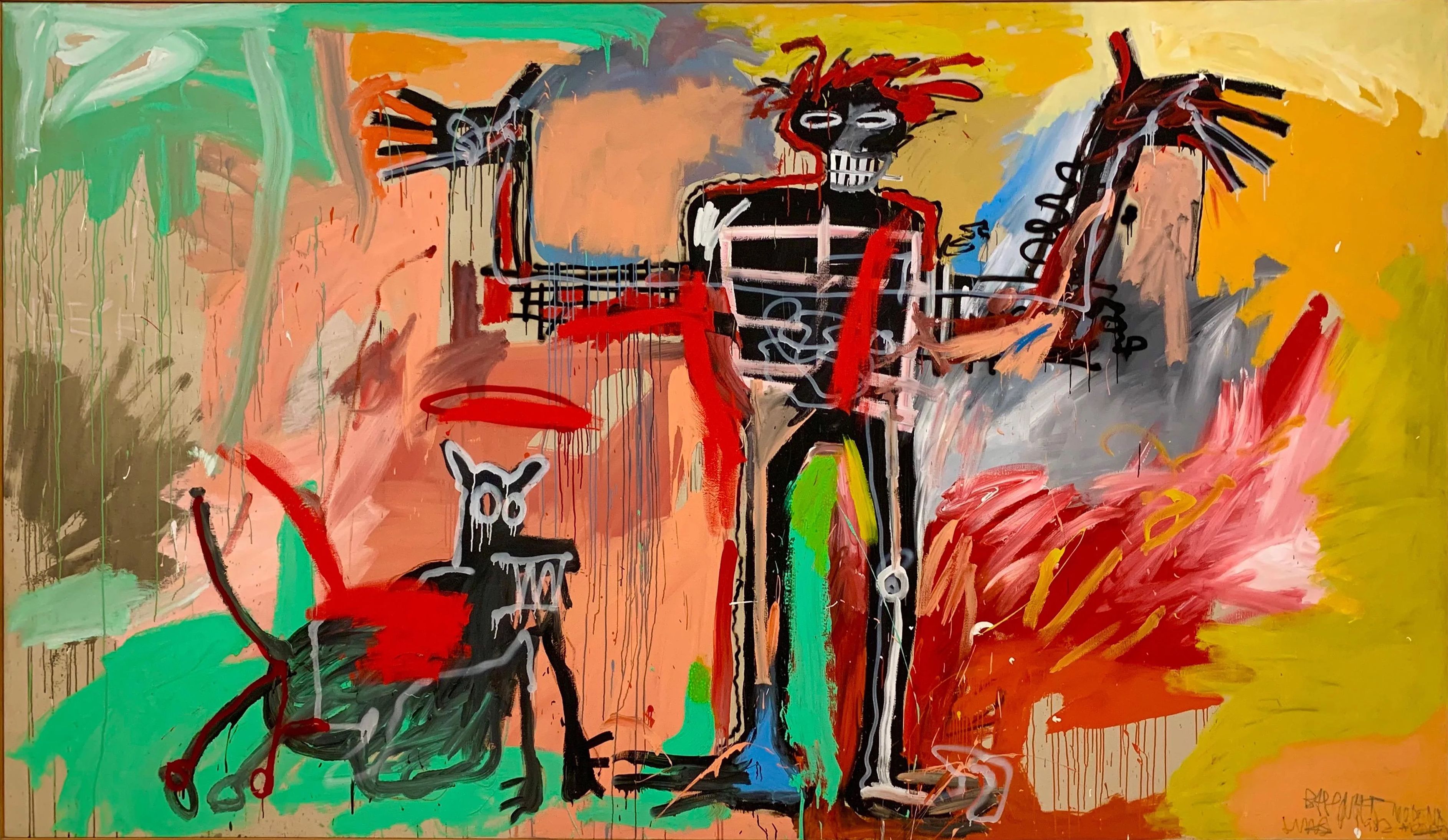
They're not separate things
Most people treat art and culture as companions, two items on the same museum placard. But that framing understates something important: art is one of the primary ways culture gets made, stored, and transmitted in the first place. Take the art away and you lose a huge portion of what holds a culture together.
The word "culture" itself covers a lot of ground. Anthropologists at the Smithsonian describe culture as the full range of learned behaviors, beliefs, and expressions that a group shares and passes down. Notice that word "expressions." Art, in almost every documented human society, is one of the earliest and most persistent forms of that expression. Cave paintings at Lascaux date to roughly 17,000 years ago. We don't have recordings of what those people said to each other, but we have the images.
So the relationship between art and culture isn't incidental. It's structural.
How art reflects culture
The most obvious direction of influence runs from culture to art. Artists are born into specific places, times, and social conditions. Those conditions show up in the work whether the artist intends them to or not.
Consider a concrete example. Dutch Golden Age painting in the 17th century produced an enormous volume of still lifes featuring imported spices, expensive textiles, and Chinese porcelain. That's not just aesthetic preference. It directly mirrors the Dutch Republic's role as the dominant trading empire of the period, with the VOC controlling global spice routes. The art is, among other things, a document of economic pride. Viewers at the time would have read those objects the same way a contemporary audience reads a luxury brand logo.
Or look at the Harlem Renaissance of the 1920s and 30s. Writers, painters, jazz musicians, and photographers produced work that explicitly asserted Black American identity at a time when the dominant culture denied its full humanity. The art wasn't decorating a pre-existing culture. It was arguing for a culture's right to exist. Artists like Aaron Douglas drew on African visual motifs and fused them with modernist geometry to create something that said: this history is real, this community is real, and we're not disappearing.
There's a useful framework for this in the work of the cultural theorist Stuart Hall, who wrote extensively about how representation works. According to Hall, images and artworks don't just reflect meaning, they produce it. A painting of a specific group of people, made with care and skill and intended for a wide audience, actively constructs how that group is perceived. That's a different claim than "art holds up a mirror." It's saying art builds the mirror.
How culture shapes what art gets made
The influence runs the other way too. Culture determines which art gets funding, which gets displayed, which gets taught to children, and which gets buried.
Medieval European culture was organized almost entirely around the Church, and so the vast majority of surviving art from that period is religious in subject. This wasn't purely because every artist was personally devout. It was because the Church was the primary patron. The art that got made was the art that cultural power structures wanted made.
The same dynamic plays out today, just with different power structures. The art market, museum acquisition budgets, social media algorithms, and grant committees all function as cultural filters. They decide, with enormous consequences, whose work becomes "art history" and whose work disappears. Colossal does some of the best ongoing journalism covering artists whose work sits outside those mainstream structures, and reading through their coverage makes it obvious how many genuinely significant artists operate without institutional support.
This is worth sitting with if you're interested in how to start engaging with art seriously. The art you've been shown in school or in major museums is not a neutral sample. It's the product of specific cultural decisions made by people with specific interests. That's not a conspiracy, it's just how institutions work.
The interdependent relationship: each one changes the other
Here's where things get more interesting than a simple "art reflects culture" argument. The relationship is genuinely bidirectional, and sometimes art leads culture rather than following it.
Abstract Expressionism is a good case. When painters like Mark Rothko and Franz Kline were working in New York in the late 1940s and 50s, the broader American public had essentially no framework for understanding large-scale non-representational painting. The culture wasn't asking for it. But within two decades, abstraction had become the dominant language of postwar American high culture, and its visual vocabulary had seeped into graphic design, advertising, and architecture. The art moved faster than the culture, and the culture caught up.
This is what makes the relationship interdependent rather than simply reflective. Art can absorb cultural pressures and then push back, sometimes ahead of where the broader society is willing to go. The AIDS crisis produced a wave of activist art, much of it furious and explicit, that addressed a public health catastrophe at a time when mainstream culture was still largely silent on the subject. That art didn't just document the moment. It helped shift what was speakable in public discourse.
You can see this in the way art movements build cultural momentum over time, often starting as fringe positions before becoming orthodoxies. The Impressionists were rejected by the Paris Salon. The Salon system was the official arbiter of what French culture considered art. Within thirty years, Impressionism had effectively replaced academic painting as the defining mode of serious art. The movement and the culture reshaped each other through sustained tension.
How does art bring people together?
This is one of the more commonly asked questions about the art-culture relationship, and the honest answer is: in specific, concrete ways, not through vague uplift.
Shared aesthetic experience creates common reference points. If you grew up in Mexico, the murals of Diego Rivera and José Clemente Orozco are part of your visual language whether you studied art history or not. Those images circulate through public spaces, textbooks, and everyday imagery until they become part of how a community understands its own history. That's a real form of cohesion.
At a smaller scale, community art projects do something similar. Research published in journals like Taylor and Francis's Cultural Trends has found that participation in communal arts activities, whether that's a local theater group, a mural project, or a community choir, correlates with stronger reported feelings of belonging and trust in neighbors. The mechanism isn't mysterious. Making something together requires sustained attention to other people. That attention, repeated over time, builds relationship.
Art also brings people together across time. When you stand in front of a Rembrandt portrait and feel something, you're participating in an experience that connects you to everyone who has stood in that same spot over the past three centuries. The painting is a kind of technology for transmitting interiority across generations.
How does art reflect culture: specific examples
A few more concrete illustrations help ground this beyond the theoretical:
- Japanese woodblock prints (ukiyo-e): These 18th and 19th century prints depicted actors, sumo wrestlers, and pleasure districts. They're documents of a very specific urban leisure culture that emerged in Edo (now Tokyo) as a merchant class gained economic power. The art form and the social class developed together.
- Hip-hop visual culture: Album art, graffiti, and music video aesthetics from the 1980s onward didn't just decorate hip-hop music. They built a visual identity for communities that were largely absent from mainstream American cultural representation. That visual language has since gone global.
- Soviet Constructivism: The bold geometric posters and typography of early Soviet Russia were explicitly designed to build a new kind of citizen. The state understood that art shapes perception, and it invested accordingly. The aesthetic was inseparable from the political project.
- Indigenous Australian art: Dot painting traditions that became widely recognized in the 20th century encode geographic knowledge, Dreamtime stories, and land ownership in visual form. The art isn't illustrating the culture, it is one of the primary containers in which the culture lives.
Why this matters practically
Understanding the art-culture relationship isn't just an academic exercise. It changes how you look at art and how you understand your own cultural moment.
If you recognize that art is always produced inside a cultural context, you start asking different questions in front of a painting or a photograph. Not just "is this beautiful?" but "who made this, for whom, under what conditions, and what does it assume about its audience?" Those questions open up a lot.
They also help you spot what's missing. As Wikipedia's overview of art notes, the dominant narrative of Western art history has historically centered a narrow range of voices, primarily European, primarily male. Recognizing that this narrative is culturally constructed rather than naturally inevitable makes space to look for what it excluded. Artists like Kerry James Marshall have spent entire careers making that exclusion visible, as this breakdown of Kerry James Marshall's art style explains in detail.
The same applies to how you think about contemporary art. Work that seems strange or inaccessible often makes more sense when you place it in its cultural context. Abstract art that appears to have no subject frequently has a very specific subject: the act of perception itself, or the limits of representation, or the conditions of its own making. If you've ever wondered why that kind of work counts as art at all, the question of why abstract art is considered art is worth spending time on.
The relationship doesn't have a clean conclusion
Art and culture don't operate on a fixed schedule where one leads and the other follows. Sometimes a single work shifts the cultural conversation overnight. Sometimes a whole movement simmers for decades before it changes anything. Sometimes art gets absorbed by the dominant culture and loses its edge entirely, which is its own kind of cultural story.
What holds across all of it is the basic fact: you cannot fully understand a culture without looking at what it made, and you cannot fully understand what was made without knowing the culture that produced it. The two things interpret each other. That's not a soft observation. It's a practical method for reading the world more clearly.